









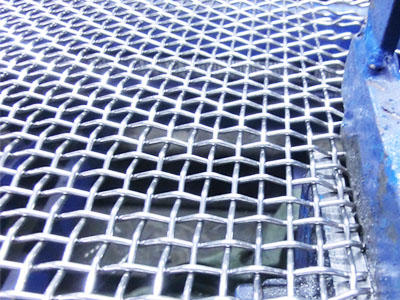
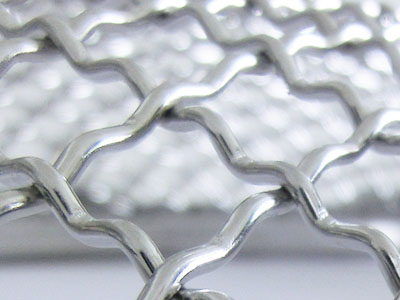
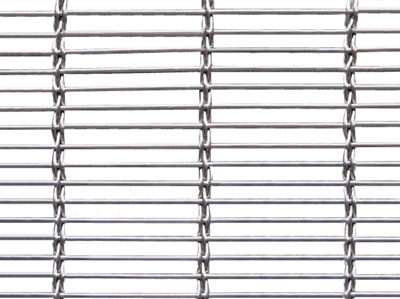
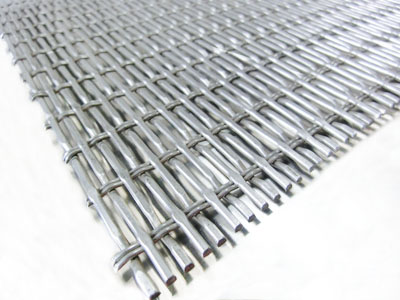
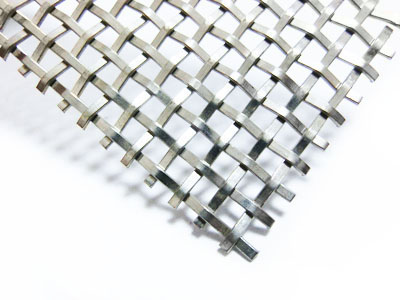
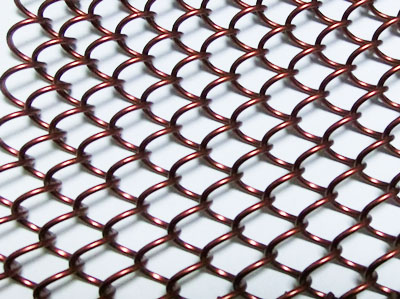

What is the Difference Between Plain and Twill Weave Stainless Steel Wire Mesh
Imagine you are buying 304 stainless steel wire mesh. You ask two suppliers for a quote. One is about 20% more expensive than the other. The only difference is the weave: plain or twill.
Many buyers treat the weave as a different surface pattern. Actually the weave pattern determines how the mesh performs in service.
What Is Plain Weave?
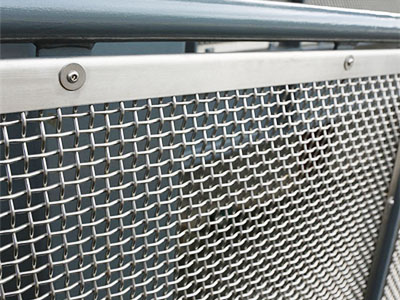
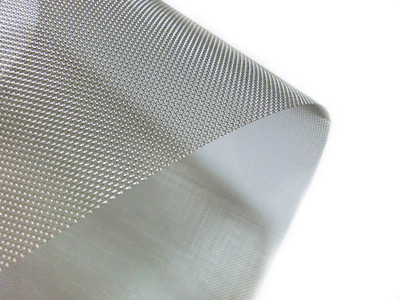
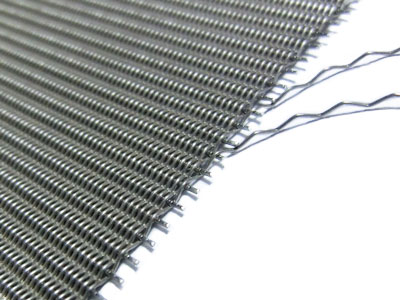
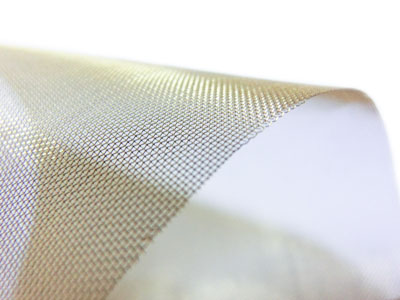
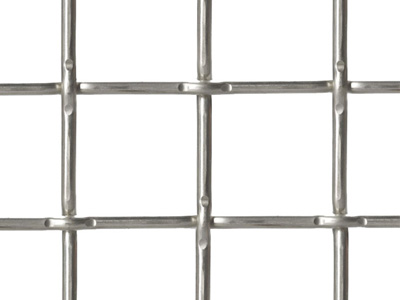
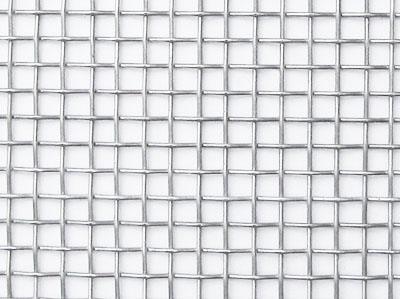
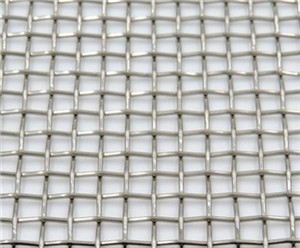
Plain weave is the simplest and most common pattern. Each weft wire passes over one warp wire and under the next (one-over, one-under). Warp and weft wires cross at right angles and lock at every intersection, producing a regular grid of square openings.
What Is Twill Weave?
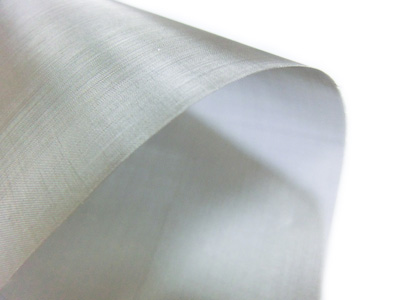
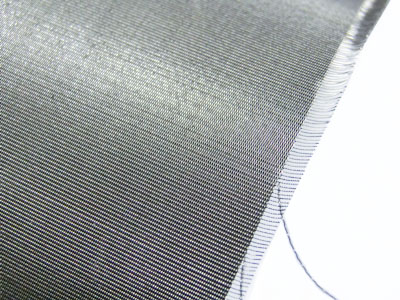
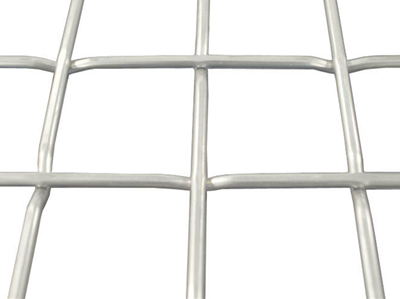
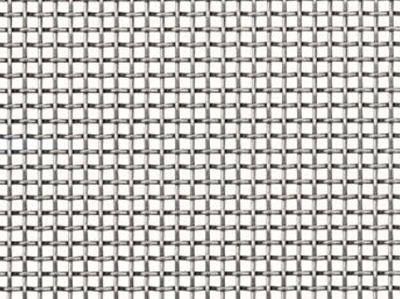
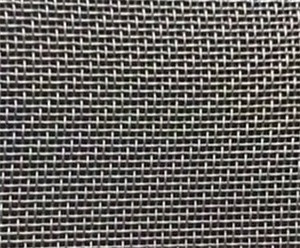
Each weft wire passes over two warp wires and under the next two (two-over, two-under), so the crossing points are staggered and form a visible diagonal line across the cloth. This construction lets the weaver use heavier wire at a given mesh count than plain weave allows, which is why twill is the usual choice for finer meshes and tougher service conditions.
Plain and Twill Weave Comparison
Performance | Plain Weave | Twill Weave |
pattern | 1 over, 1 under | 2 over, 2 under |
Opening uniformity | Highest; best control of opening size | Good, but typically less uniform than plain |
Effective filtration accuracy | Closest to the nominal rating | Often somewhat lower than nominal |
Strength and wear resistance | Moderate | Higher; better load distribution |
Flow resistance | Lowest; highest throughput | Higher; lower throughput at the same pressure |
Typical mesh range | Up to 300Mesh | Up to 635 Mesh |
Best for | Precision screening, large-flow pre-filtration | Heavy-duty, abrasive, viscous or ultra-fine filtration |
1. Filtration Accuracy and Opening Uniformity
Because each wire crosses its neighbour in a simple, balanced pattern, plain weave produces the most regular square openings . Opening size tolerance can be held tight (a typical goal is within ±3% on well-controlled production). This makes it the most dependable weave when your process depends on a specific cut point, for example when screening powders to a defined particle size or when you need a repeatable filtration rating.
Twill weave
The staggered interlacing in twill weave makes the wire positions less regular, and the openings tend to vary a little more from the nominal value. In practice, the effective filtration accuracy of twill mesh can be noticeably lower than the nominal rating, sometimes by around 10-15% depending on construction. This isn’t a defect. It is a characteristic of the weave.
What goes wrong when you choose incorrectly
If you use twill weave where tight, repeatable particle retention is critical, expect more particle breakthrough, higher turbidity in the filtrate and inconsistent screening results from batch to batch.
2. Strength, Durability and Wear Resistance
Plain weave
Plain weave has fewer interlacing points per unit area than twill. Stress tends to concentrate at those points, so the mesh is generally less resistant to heavy impact, abrasion and repeated flexing. For clean, low-pressure service this is perfectly acceptable.
Twill weave lets the manufacturer use heavier wire at a given mesh count and spreads load across more wire. The result is a cloth that is generally stronger (often in the range of 25-30% higher overall strength than a comparable plain weave in this kind of comparison) and better at resisting abrasion and deformation.
What goes wrong when you choose incorrectly
Plain weave in high-pressure, abrasive or frequent back-flushing service tends to fail early. Typical symptoms include broken wires, bulging of the screen, and a service life that can be half of what a suitable twill mesh delivers, or less.
3. Flow Rate and Resistance to Flow
Plain weave
Fluid passes through the open, regular holes of plain weave along a fairly direct path. Resistance is low and throughput is high at a given pressure. That makes plain weave a natural choice for high-volume coarse filtration, strainers and pre-filters where you want to protect downstream equipment without throttling the system.
Twill weave
Fluid has to follow a more tortuous path through twill cloth, and the heavier wire and denser construction increase resistance. Pressure drop can be around 30-40% higher than plain weave in comparable situations, which means lower throughput at the same driving pressure.
What goes wrong when you choose incorrectly
Fitting twill mesh in a high-flow application can lead to rising differential pressure, reduced output and extra load on pumps and other equipment. In severe cases it can contribute to equipment failure.
4. Mesh Range and Typical Applications
Plain weave
Plain weave is widely used from very coarse openings up to around 300 mesh in standard production. It is widely used for
Coarse filtration and screening
Pre-filters and strainers in high-flow lines
Precision sieving and test screens where opening accuracy is critical
Fine filtration where the opening tolerance must be tightly controlled
Twill weave is the standard route for very fine meshes. Depending on construction, it is available far finer than plain weave, with products specified up to around 635 mesh. It is typically used for:
Ultra-fine filtration
Viscous liquids such as polymer melts, resins and oils
Corrosive media where a heavier, more robust wire is advantageous
High-pressure filtration and abrasive slurries
Simple summary
Choose plain weave when you want stable accuracy, high flow and low resistance.
Choose twill weave when you want higher strength, better wear resistance or very high mesh counts.
Frequently Asked Questions
Is twill weave always better than plain weave because it is stronger?
No. Twill weave is stronger and more wear-resistant, but it generally has higher flow resistance and less uniform openings.
Can I use plain weave for ultra-fine filtration?
Standard plain weave has a practical upper limit in mesh count. For very fine filtration, twill weave is normally used.
Does the weave affect how easily the mesh cleans?
Yes. Open plain weave is generally easier to clean and back-flush, while dense twill structures can trap fine particles more readily but tolerate more aggressive cleaning.
With more than 40 years of experience manufacturing stainless steel wire mesh, our engineers can recommend the weave, wire diameter, alloy for your actual operating conditions. All products can be supplied with third-party inspection reports so you know exactly what you are getting.
Need help choosing? Contact our technical team for a recommendation and quotation.